
What Journalists Told Us About Mental Health in the U.S.
Journalism is essential to democracy—but the people who produce the news are under extraordinary strain.
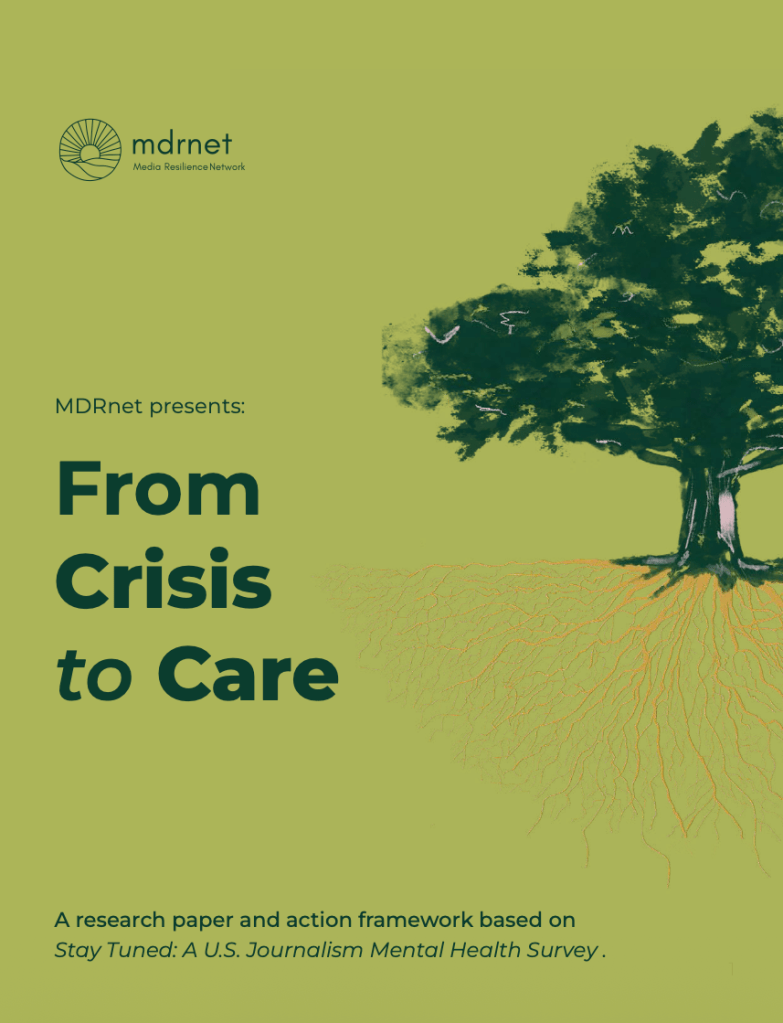
In 2025, the Media Resilience Network (MDRnet) launched Stay Tuned: A U.S. Journalism Mental Health Survey to better understand how journalists across the country are experiencing their work, their well-being, and the systems meant to support them. The results, published in our new report From Crisis to Care, confirm what many in the industry have felt for years: the mental health crisis in journalism is real, widespread, and systemic.
What the survey found
The survey collected in-depth responses from 80 journalists across 26 states, the majority of whom are mid-career and veteran professionals. While the experiences varied by role, identity, and location, several findings were consistent and alarming:
- More than 80% of journalists reported experiencing burnout or chronic stress in the past year
- 45% said they feel stressed or depleted
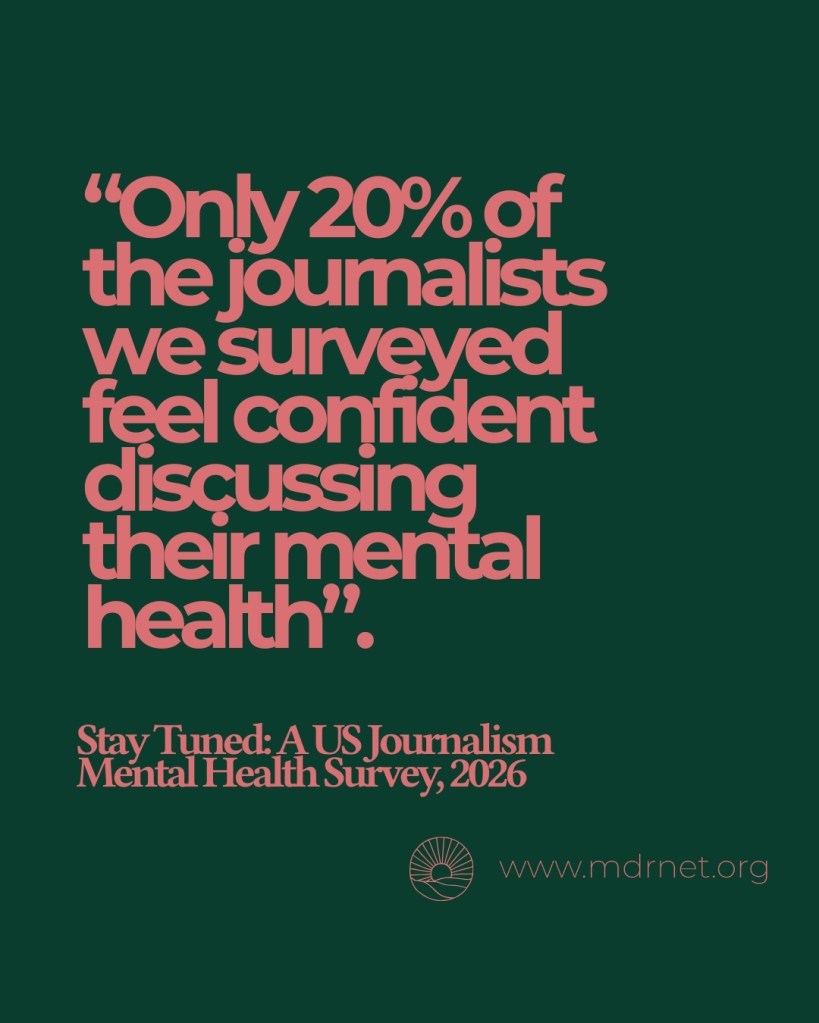
- 20% described their emotional well-being as poor and said they need support now
- Only 2.5% rated their mental health as excellent
These challenges are not the result of individual failure or lack of resilience. Journalists overwhelmingly linked their distress to structural conditions—economic insecurity, newsroom culture, unsafe working environments, and limited access to appropriate mental health care.
Economic insecurity and workload are central stressors
Financial instability emerged as one of the strongest contributors to poor mental health. Layoffs, shrinking local newsrooms, short-term contracts, and the growing reliance on freelance labor have left many journalists without steady income, benefits, or health insurance.
When asked about barriers to accessing mental health support, respondents most often cited:
- The high cost of care and lack of affordable options
- Workload and time constraints that make care inaccessible
- A lack of culturally competent providers who understand journalism and journalists’ lived experiences
Generic employee assistance programs and one-off wellness initiatives were widely viewed as insufficient for the realities of the profession.
The toll is not evenly distributed
The survey also makes clear that the mental health crisis in journalism does not affect everyone equally. Women, gender-diverse journalists, freelancers, and journalists from historically marginalized communities reported higher levels of burnout, emotional exhaustion, and feelings of unsafety.
More than one quarter (28.7%) of respondents said they do not feel safe discussing mental health concerns within their professional networks, citing fear of stigma, retaliation, or judgment. Only 20% said they feel supported and heard.
Journalists of color, immigrants, LGBTQ+ journalists, and those working in hostile political climates described additional stress tied to identity-based harassment, cultural stigma around mental health, and the absence of providers who reflect or understand their communities.
What journalists are asking for
One of the clearest findings of the survey is what journalists do not want: more platitudes about resilience or self-care detached from working conditions.
Instead, journalists are calling for:
- Free or affordable mental health care
- Culturally responsive, journalism-aware providers
- Support that is embedded into newsroom structures, not treated as a personal afterthought
- Access for freelancers and independent media workers, not only staff employees
- Leadership accountability and trauma-informed newsroom cultures
As one respondent put it, mental health support should move journalists “from just coping to actually sustaining ourselves in this work.”
From research to action
From Crisis to Care is not only a research report—it is a call to action. Over the next three years, MDRnet will translate these findings into concrete initiatives designed to embed mental health into the fabric of journalism. This includes culturally competent coaching and counseling, peer support and affinity spaces, support for freelancers and small outlets, and trauma-informed leadership training.
The erosion of journalists’ mental health mirrors the erosion of democracy itself. Supporting journalists is not charity—it is civic defense.
We invite journalists, newsroom leaders, funders, and partners to read the full report and join us in building a healthier, more sustainable future for journalism.
This survey and report was produced and analyzed by Dagmar Thiel, Ana Arriagada, Joe Ruiz,and Luisa Ortiz. Editorial Design by Constanza Figueroa. January 2026.
The authors of this report used Google Forms and Google Spreadsheet to process data, Notebook LM and Chat GPT to summarize and help with the analysis of the data, LIWC 22 to analyze sentiment
Press Release
Media Contacts:
- Luisa Ortiz Pérez, MDRnet.org Lead and CoFounder, lu@vita-activa.org
- Dagmar Thiel, MDRnet.org Managing Director for Capacity Building, dagmar@vita-activa.org
 The Media Resilience Network
Leave a comment